






馬灣涌村的旁觀者手記
Echoes from the Deep: The Mural’s Silent Testament
撰 文 海鹽
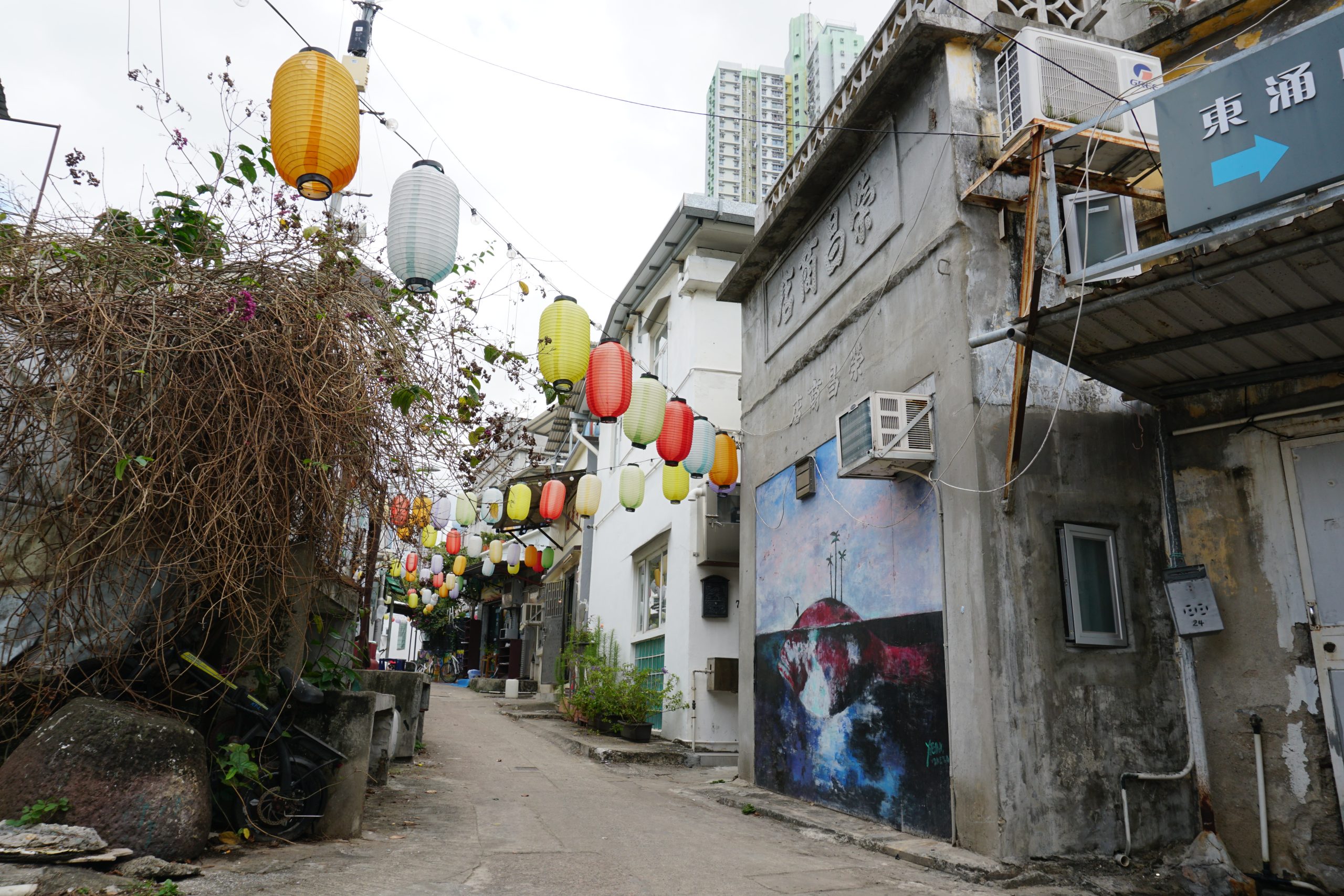
衣着實用而樸素的老村民、非現代城市規劃式凹凸起伏的單行道、描繪人與自然生命共存的壁畫、祈求出海平安的神壇、荒廢的交通樞紐、滿佈痕跡的建築群,全都指向那曾經作為漁村而繁盛一時的馬灣涌村,她們是時代的見證,又同時象徵着那個時代早已遠去。這些象徵性的點再不能如以往般串連交織成一個有機網絡,而只能在現代性的浪潮底下化為一個個零碎而失去功能的點,埋藏在閃亮而平滑的城市下,如黑耀石般隱約地透出黑色的光芒。
物質的改變與觀念的轉移總是相互糾纏,學者用先入為主的眼睛去定奪哪個才是引發改變的基點,深入而細緻地剖析人與物之間的關係與互動,這是學者的工作。而我只能作為一個匆匆的過客,以旁觀者的眼睛去速寫這裡的變遷,而我的着眼點則是那幅壁畫,它凝縮了一個對大自然尚存敬畏的視角,記錄了一個世界觀的範式轉移,或許也透露了這條曾經繁盛的村莊如何步入沒落的線索。
壁畫被一條絕對的分界線切割成兩截,上半部是清晰而佈滿雲彩的明亮藍天,而下半部的海洋則是光的墳墓,像是黑夜般的深藍,時而卻隱約地透著幽冥而動人的靛光。一條巨魚在畫面裡面佔據中心位置,介於天空與海洋之間,上半身浮在水面,而下半身則隱沒在海洋。一個人影站在魚頭的地方垂釣,在巨魚的對照下顯得極為渺小,而在人影後面,還有三棵健壯而指着天際的棕櫚樹。
像古代原住民的洞穴壁畫,這一副壁畫用相對簡單的構圖、鮮明對比的色彩,以及幾個象徵元素,記載着馬灣涌村往昔的生活信仰。在這裡,人類並不是將自己放大並置放在畫面中間的,人類將中心位置讓位予動物;而人類自身不是佔據整個畫面,而是夾於浩瀚天空與海洋之間的渺小存在;人類並不是用自己的雙腳站於天地之間,而是需要依附於動物與自然才得以棲身;人類不是用機械來進行生產,而是手拿釣竿耐心地等待;人類不能對世界一目了然,深海保有那種超越人類存有的無限與神祕。
種種象徵都是指向一個與現代世界截然不同的模樣。這幅畫作所描繪的人類並不能單靠理性支配和擄獲世界,也不能僅靠自己勞動與生產力在世界立足,也不是彰顯人類支配自然的勝利。相反的,人類正在做的是耐性地與神祕的自然及當中的生命建立共生而謙卑的關係,感恩正是有她們的存在才能使自己活著,從而得以在象徵安定的棕櫚樹下棲居。換言之,這幅畫裡所透顯出的,是一套非人類中心主義的世界觀,大自然作為他者的地位是優先於人類的,而這恰好說明了馬灣涌村曾經作為漁村,村民曾經所督信的觀念,即若沒有大自然的種種眷顧,她們是生存不了的,她們的興盛是以敬畏自然作為基礎的。對於信仰着幾乎一切都可以用金錢來換取、自然僅作為資源是隨手可得的現代人來說,畫中顯示的世界觀無疑是陌異又落後的,而這又反過來使這幅畫更加神祕,像是銘刻在村莊的古老傳說一樣。
面對一幅充滿鄉愁的景像,是否要停下腳步,追尋往昔?還是要回過頭來,翻出對未來的想像?馬灣涌村的村民似乎傾向於後者。
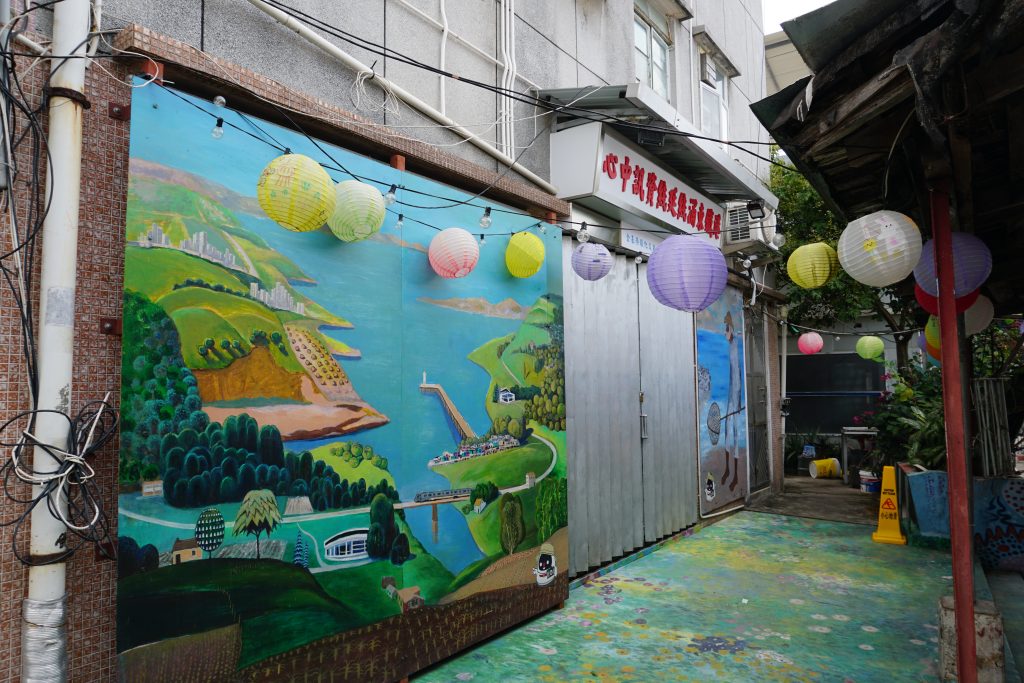
由區內小學生與上面畫作的創作者在不遠處的牆壁,合力畫下了一幅色彩鮮艷的畫作,裡面的馬灣涌村大體上依舊環抱着大自然,即使毗鄰着象徵都市的大廈,也依然保有一段距離,差異在於村莊是與現代化的運輸系統相連接,這一定程度地沖淡了那個城市與村莊的界線,是在保護自己的原有環境的基礎上歡迎來自城市的交流,村內碼頭的燈塔置於畫面的中間,意味着其對外來之物的接納,這似乎是參與畫作的年輕村民與創作者在回顧自己的歷史後所作出的決定,似乎想要將那些埋藏起來的黑耀石在現今的脈絡再次串連成一個新的網絡,而歷史自會在未來揭曉其嘗試能走到多遠。
Elderly villagers dressed in practical, modest clothing; undulating one-way paths that defy modern urban planning; murals depicting the coexistence of humanity and nature; altars praying for safety at sea; abandoned transport hubs and clusters of buildings marked by the passage of time—all of these point toward the Ma Wan Chung that once flourished as a fishing village. They are witnesses to an era, yet simultaneously symbols that such an era has long since drifted away. These symbolic points can no longer interweave into an organic network as they once did; under the tide of modernity, they have turned into fragmented, non-functional spots buried beneath the shiny, smooth surface of the city, faintly emitting a dark glow like hidden obsidian.
Changes in materiality and shifts in ideology are always entangled. Scholars use preconceived eyes to determine which point triggered change, conducting deep and meticulous analyses of the interactions between people and objects—this is the work of academics. I, however, can only be a hurried passerby, sketching the transformations here through the eyes of a bystander. My focus settles on a specific mural, which encapsulates a perspective of lingering awe toward nature and records a paradigm shift in worldviews—perhaps even revealing clues as to how this once-prosperous village stepped into decline.
The mural is sliced into two by an absolute boundary. The upper half is a bright blue sky filled with clouds, while the ocean in the lower half is a tomb of light—a deep blue like the dead of night, yet occasionally shimmering with a faint, ethereal indigo. A giant fish occupies the center of the frame, caught between the sky and the sea; its upper body floats on the surface while its lower half is submerged. A human figure stands near the head of the fish, rod in hand, looking minuscule in contrast to the creature. Behind the figure stand three sturdy palm trees pointing toward the heavens.
Reminiscent of ancient indigenous cave paintings, this mural uses a relatively simple composition, starkly contrasting colours, and several symbolic elements to record the ancestral beliefs of Ma Wan Chung. Here, humans do not magnify themselves or place themselves in the centre of the frame; humanity yields the central position to animals. Humans do not occupy the entire scene but exist as small beings sandwiched between the vast sky and the sea. Humanity does not stand upon the earth on its own two feet but relies on animals and nature to find a dwelling place. Humans do not produce through machinery but wait patiently with a fishing rod. Humanity cannot know the world at a glance; the deep sea retains an infinity and mystery that transcends human existence.
These symbols point toward a world entirely different from our modern one. The humanity depicted in this artwork does not rely solely on reason to dominate or capture the world, nor does it stand firm through labor and productivity alone. It is not an exhibition of human victory over nature. Instead, humanity is patiently establishing a symbiotic and humble relationship with a mysterious nature and the life within it, grateful that their very existence allows one to live and dwell beneath the palm trees that symbolize stability. In other words, what is revealed in this painting is a non-anthropocentric worldview. Nature holds a status of “Other” that takes priority over humanity. This perfectly illustrates the beliefs held when Ma Wan Chung was a thriving fishing village: without the various blessings of nature, they could not survive. Their prosperity was built upon the foundation of revere for nature. To modern people, who believe almost everything can be exchanged for money and that nature is merely a resource at one’s fingertips, the worldview shown in this painting is undoubtedly alien and “backward.” This, in turn, makes the mural even more mysterious—like an ancient legend etched into the village.
Faced with a scene full of nostalgia, should one stop and chase the past? Or should one turn around and unearth imaginations for the future? The villagers of Ma Wan Chung seem to lean toward the latter.
On a nearby wall, local primary school students and the creator of the aforementioned artwork collaborated on a vibrant new mural. In this piece, Ma Wan Chung largely remains embraced by nature. Even though it sits adjacent to skyscrapers symbolizing the city, it maintains a certain distance. The difference is that the village is now connected to a modern transportation system. This, to some extent, blurs the boundary between city and village, welcoming exchange with the urban world while protecting its original environment. The lighthouse at the village pier is placed in the center of the frame, signifying an acceptance of things from the outside. This seems to be a decision made by the young villagers and creators after looking back at their own history. They seem to want to reconnect those buried pieces of obsidian into a new network within a modern context. History will eventually reveal in the future how far this attempt can go.